















Key points
- Vitamin C. Supports general immune health and is a popular antioxidant ingredient in skincare.
- Vitamin D. The sunshine vitamin, which may help support general mood and wellbeing.
- Beauty vitamins. Vitamin E and Vitamin B are associated with healthy-looking skin, hair and nails.
- Ginseng. Traditionally used to support mental focus and general cognitive wellbeing.
- Iron and Zinc. Important minerals that contribute to normal energy levels and general wellbeing.

Vitamin C - the Wrinkle Stopper
When one thinks of vitamin c, it is often associated with supporting general immune health during cold season. However, this little vitamin packs a powerful punch in other ways too. As well as being thought to help prevent more serious complications of a cold, it may help support general immune health and is commonly included in skincare products for its antioxidant properties! Yep, a daily dose of vitamin c can help prevent those fine lines, which is why the vitamin is featured in so many skin products - it is a popular ingredient in skincare products for its association with a firmer-looking complexion.
buy yours
Vitamin D - The Sunshine Vitamin
After a long winter many people crave a dose of the 'sunshine vitamin', Vitamin D. The sun's rays help to produce this vitamin naturally in your skin. However, along with the fact that the sun isn't always shining, staying in the sun can produce countless problems, including skin cancer and wrinkles. Therefore, it's much easier to take the vitamin as a substance. One of the surprising benefits of taking Vitamin D is that it may help support general mood and wellbeing. Much more than an old wives tale, often people feel blue in winter, and this can be because of a lack of vitamin D. Aside from the sunshine effects of Vitamin D, some research has explored Vitamin D's role in general metabolic health as part of a balanced lifestyle. We don't know about you, but we sure don't need any more convincing!
buy yours
Ginseng - The Magic Memory Vitamin
Ever struggled to remember a phone number or a certain date? If so, you might simply need to add more ginseng to your diet. Ginseng has traditionally been used in herbal medicine to support mental clarity and general cognitive wellbeing. This is because ginseng is traditionally used to support general mental focus and wellbeing. In fact,.
buy yours
Vitamin E - The beauty vitamin
To put it simply, Vitamin E is the beauty vitamin. Along with a range of health benefits, it also works wonders on skin and hair to add lustre. Vitamin E is a popular ingredient in skincare and haircare products, associated with a hydrated-looking complexion, softer-feeling lips, and smoother-looking hair. Whew! And, it's not just hearsay, there's been a tonne of skin care studies that confirm these benefits. One study showed that Vitamin E is commonly included in sun-care formulations for its antioxidant properties.
buy yours
Vitamin B - The All Rounder
Vitamin B complex is, well, pretty complex. It's made up of the 8 B vitamins - B1, B2, B3, B5, B6, B7, B9, B12. Because there's a huge range of different vitamins packed into this one, it has a huge range of benefits too. One of the benefits of Vitamin B complex is that it is involved in normal cell function and may help support general health and wellbeing. Niacin (B3) is commonly found in skincare formulations associated with a clearer-looking complexion. Like Vitamin E, the vitamin B7 found in vitamin B complex is also known as a 'beauty vitamin'. This one is popularly associated with the appearance of healthy-looking hair, skin and nails.
buy yours
Iron - The Necessity
Iron is an important mineral that contributes to normal energy levels and general wellbeing as part of a balanced diet. So if your iron levels are lacking, so too will your overall health be. If your diet is lacking in iron an easy way to up your levels is by taking iron tablets/supplements. And a lack of iron isn't a rare thing whatsoever. In fact, Iron is an important mineral; many people may not get enough through diet alone. If you are concerned about your iron levels, speak to your healthcare professional..
buy yours
Zinc - The Antioxidant Mineral
Like a lot of other vitamins, Zinc is an important mineral that may help support general health and wellbeing as part of a balanced diet. It's also been found to be a powerful anti-oxidant. It has been particularly helpful in elderly patients, as.
buy yoursImportant: If you are concerned about your iron levels, speak to your healthcare professional.
A correction: ginseng is not a vitamin
One of the headings above calls ginseng a vitamin. It is not. Ginseng is a herb, and it belongs in a different category from the vitamins and minerals in the rest of this article.
The distinction matters. Vitamins and minerals are essential nutrients: your body cannot make them in sufficient quantity, deficiency causes identifiable problems, and correcting a deficiency reliably helps. Herbs are not essential, there is no deficiency state, and the evidence is generally weaker.
Ginseng has some research interest for fatigue and cognition, with mixed results. It is not comparable to the evidence for, say, iron in someone who is iron deficient.
What are the most important vitamins and minerals?
The honest answer is the ones you are short of, which is why testing beats guessing.
That said, the deficiencies most commonly found in Australian adults are worth knowing:
- Vitamin D. Common despite the climate, particularly in winter, for people who work indoors, and for those with darker skin.
- Iron. Particularly in women of reproductive age, and in vegetarians. One of the most-missed causes of persistent fatigue.
- Vitamin B12. Mainly in vegans and vegetarians, and in older adults where absorption declines.
- Iodine and calcium, depending on diet.
All are identifiable with a blood test. A test costs less than several months of taking things you may not need.
Which vitamin helps with fatigue?
Only the one you are deficient in, and this is the most useful thing on this page.
Iron and B12 are the two whose deficiency most clearly causes fatigue, and correcting either can make a dramatic difference. Vitamin D deficiency is also associated with tiredness and low mood.
But if your levels are normal, taking more will not give you energy. This is the single most common misunderstanding about vitamins: they are not stimulants, and topping up something you already have enough of does nothing.
Persistent fatigue also has many causes that are not nutritional at all, including thyroid problems, sleep apnoea and depression. If you are consistently exhausted, see your GP rather than working through the vitamin aisle.
Can you take too much?
Yes, and this gets less attention than it deserves.
- Fat-soluble vitamins (A, D, E, K) accumulate in the body and can reach harmful levels. Vitamin A in particular is dangerous in excess and is a genuine concern in pregnancy.
- Iron is toxic in overdose and should not be supplemented without knowing your levels. Excess iron is harmful, and iron supplements are a common cause of accidental poisoning in children.
- Water-soluble vitamins (B and C) are more forgiving, since excess is largely excreted. Very high doses of B6 over long periods have been linked to nerve problems.
"Natural" does not mean "no upper limit". More is not better once you are sufficient.
Do I need a multivitamin?
If you eat a varied diet, probably not, and we would rather say so.
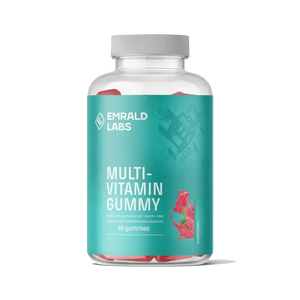
A multivitamin is reasonable insurance if your diet is genuinely limited, if you are on a restrictive eating pattern, or during periods when eating well is not happening. It is not a substitute for food, and it will not correct a significant single-nutrient deficiency, because the doses are usually too low for that.
If a blood test shows you are short of something specific, a targeted supplement at the right dose does more than a multivitamin containing a fraction of what you need.
The health and vitamins range has both.