




















Most people know exercise is good for the body. The evidence that resistance training specifically helps mental health is stronger than most people realise, and stronger than a lot of supplement marketing that gets far more attention.
Key points
- 33 randomised trials. Analysed together in JAMA Psychiatry.
- Reduced depressive symptoms. That was the finding.
- Effect did not depend on getting stronger. Notable.
- Not a replacement for treatment. An addition to it.
- Consistency beats intensity. Two or three sessions a week.
What the research found
A meta-analysis published in JAMA Psychiatry in June 2018 pooled 33 randomised clinical trials covering 1,877 participants, and found that resistance exercise training was associated with a significant reduction in depressive symptoms.
Two details are worth pulling out, because they change how you should read it.
The effect did not appear to depend on becoming stronger. Participants who improved most in strength were not necessarily those who improved most in symptoms. Whatever is happening, it is not simply a consequence of physical adaptation.
It held across the population studied, including in people without a diagnosed condition. This is not only a clinical intervention.
An earlier version of this article described the finding as "improvements in general mood and motivation". That understated it. A pooled analysis of 33 randomised trials in a major psychiatry journal is strong evidence, and describing it more cautiously than it deserves is its own kind of inaccuracy.
Is resistance training better than cardio for mental health?
Both help, and the honest answer is that the comparison is less settled than either camp claims.
Aerobic exercise has a longer research history and a substantial body of evidence for depression and anxiety. Resistance training has a smaller but growing body, including the analysis above. Studies comparing them directly are fewer, and there is no clear winner.
What the evidence does consistently support is that the exercise you actually do is the one that works. Adherence beats optimisation, and it is not close.
If you want a practical answer: do the one you will keep doing, and if you enjoy both, do both.
How much do I need to do?
Less than most people assume. The trials generally used two to three sessions a week over eight or more weeks.
- Two to three sessions a week is the pattern in most of the research.
- Moderate intensity is enough. There is no evidence you need to train to failure for this benefit.
- Eight weeks or more before judging. Like most things, it is not immediate.
- Consistency matters more than any programme. A basic routine you do every week beats an optimal one you abandon.
If you are starting from nothing, two sessions a week of a handful of compound movements is a legitimate programme, not a compromise.
Can exercise help with depression and anxiety?
The evidence supports exercise as helpful for symptoms of both, and it is important to be precise about what that does and does not mean.
It is not a replacement for treatment. Psychological therapy and, where indicated, medication have stronger evidence and are the first-line approaches. Exercise is well supported as something that helps alongside them.
Where it is particularly valuable is that it is available, free, has no side effects worth the name, and improves several other things at the same time.
If you are struggling, speak to your GP. Exercise is a good thing to add to a treatment plan and a poor thing to use instead of one.
In Australia, Lifeline is on 13 11 14 and Beyond Blue on 1300 22 4636, both available 24 hours.
Why might it work?
Several mechanisms are proposed, and none is established as the explanation:
- Neurochemical changes, including endorphins and effects on serotonin and dopamine signalling.
- Improved sleep, which affects mood independently.
- Self-efficacy. Adding weight to a bar over weeks is visible evidence of your own progress, which is rarer than it should be.
- Structure and routine, which matter more than they sound when things are difficult.
- Social contact, if you train with others or in a gym.
The finding that the benefit did not track with strength gains suggests the psychological and behavioural mechanisms may matter as much as the physiological ones.
Getting started
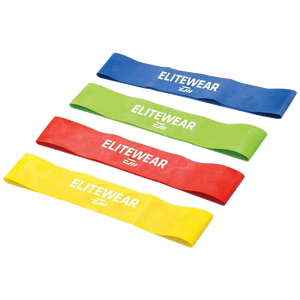
The barrier is almost never equipment. If a gym is not practical, bodyweight work and a set of resistance bands will run a legitimate programme from your living room.
Pick two or three days a week, put them in the calendar, and treat the first month as being about turning up rather than about progress. The progress follows.
References
- Gordon B R, et al. (2018) Association of Efficacy of Resistance Exercise Training With Depressive Symptoms: Meta-analysis and Meta-regression Analysis of Randomized Clinical Trials. JAMA Psychiatry, Vol 75 Issue 6, pages 566-576.