


















Creatine monohydrate and creatine HCl are the same active compound attached to different things. Monohydrate is creatine bound to a water molecule. HCl is creatine bound to hydrochloric acid, which makes it far more soluble in water.
The short answer: monohydrate is the one with the evidence behind it, and it is cheaper. HCl is worth considering mainly if monohydrate upsets your stomach or you dislike the amount of water it takes to dissolve.
Key points
- Same active ingredient. The difference is what it is bound to, not what it does.
- Monohydrate has the research. It is the most studied form by a wide margin.
- HCl dissolves better. Its genuine advantage is solubility and comfort, not results.
- No loading required. Loading fills your stores faster, it does not raise the ceiling.
- Well established safety record. In healthy people, over long periods.
What is the difference between creatine HCl and creatine monohydrate?
Both deliver creatine. What differs is the bonded molecule and, as a result, how they behave in water.
- Creatine monohydrate is creatine plus a water molecule. It is the original form, the cheapest, and the one used in the overwhelming majority of studies.
- Creatine HCl is creatine bound to hydrochloric acid. That bond makes it substantially more soluble, so it mixes into a smaller volume of water without grit.
Marketing around HCl often implies that better solubility means better absorption, and therefore a smaller dose does more. The evidence for that specific claim is thin. Solubility in a glass is not the same thing as more creatine reaching muscle.
Which type of creatine is best?
For most people, monohydrate.
The International Society of Sports Nutrition position stand concludes that creatine monohydrate is the most effective ergogenic nutritional supplement currently available to athletes in terms of increasing high-intensity exercise capacity and lean body mass during training.
That is a strong statement, and it is about monohydrate specifically, because monohydrate is what the research has overwhelmingly tested. HCl and the other forms are not shown to be better, they are simply less studied.
When HCl is the better choice
Where HCl earns its place is comfort. If monohydrate causes bloating or stomach discomfort for you, or you find the volume of water annoying, HCl is a reasonable swap. You are trading a larger evidence base for a more pleasant experience, which is a fair trade if the alternative is not taking it at all.
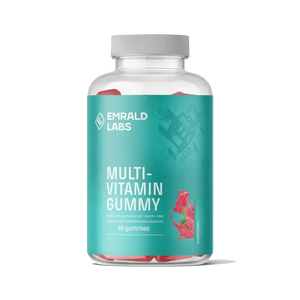
Emrald Labs Creatine HCL 2.0 is the house-brand option if you go that way.
Creatine HCl and monohydrate compared
Taking the comparison category by category is the clearest way to see where each form genuinely wins.
Absorption
This is creatine HCl's real strength. It is far more water soluble than monohydrate, so it mixes into a small glass without grit.
What that does not automatically mean is better uptake into muscle. Dissolving more easily in a glass and delivering more creatine to the muscle are two different claims, and only the first is well established.
Effectiveness
Monohydrate wins this one clearly. There is a large body of human research behind creatine monohydrate, and comparatively little on HCl.
That is not the same as saying HCl does not work. It is the same compound. It simply has not been tested to anything like the same degree, which is why every position stand and recommendation defaults to monohydrate.
Cost
Monohydrate again. HCl is usually dosed lower, but monohydrate still tends to work out cheaper per serve.
Convenience
HCl wins comfortably. It is widely available in capsules, the dose is smaller, and it mixes without effort. If the barrier to taking creatine consistently is the faff of mixing a gritty drink, that is a real advantage.
Purity
Monohydrate is a higher percentage of creatine by weight, because it is bound to a water molecule rather than the much larger hydrochloric acid molecule. That is part of why the monohydrate dose is larger.
The verdict
Monohydrate for evidence, cost and creatine per gram. HCl for solubility and convenience.
If you have no problem with monohydrate, there is no good reason to pay more for HCl. If monohydrate does not sit well with you, HCl is a sensible alternative and taking it consistently beats taking the better-researched form irregularly.
Does creatine HCl make muscles bigger?
Creatine of any form does not build muscle directly. What it does is let you train harder: more reps at a given load, better quality sets, faster recovery between efforts. That extra training stimulus is what drives muscle growth over time.
There is also a short-term visual effect. Creatine draws water into muscle cells, so people often look and feel fuller within the first couple of weeks. That is cell hydration, not new tissue, and it is not a reason to prefer one form over another.
HCl does not have a separate muscle-building mechanism. Same compound, same pathway.
How much creatine should I take?
The standard maintenance dose is 3 to 5 g a day of monohydrate, taken consistently. Timing matters far less than consistency, so take it whenever you will actually remember.
HCl is usually dosed lower, often 1 to 2 g, on the basis of its better solubility. Follow the dose on the label of the product you buy rather than converting between forms yourself.
Do I need a loading phase?
No. Loading, usually around 20 g a day split into four doses for five to seven days, saturates your muscle creatine stores faster. Taking 3 to 5 g a day gets you to the same place, it just takes a few weeks instead of a few days.
Loading also carries most of the stomach discomfort people associate with creatine, because it means large single doses. If you are not in a hurry, skip it.
Is it okay to take creatine HCl every day?
Yes, daily use is how creatine works. It is not a pre-workout stimulant you take before sessions, it is a compound you keep topped up so that your muscle stores stay saturated. That applies to both forms.
You do not need to cycle off it. There is no established benefit to doing so.
Why do some people say creatine is bad for you?
Mostly reputation rather than evidence. Creatine gets grouped in with anabolic compounds because of where it is sold and who uses it, and the idea that it damages your kidneys has been repeated for decades.
The position stand addresses this directly: there is no compelling scientific evidence that short- or long-term use of creatine monohydrate, at up to 30 g a day for five years, has any detrimental effects on otherwise healthy individuals.
The genuine, common side effects are minor: some water retention early on, and stomach discomfort if you take too much at once. Both are usually solved by dropping to a maintenance dose and taking it with food.
Important. That evidence is about otherwise healthy individuals. If you have an existing kidney condition or any other health concern, talk to your GP before starting creatine.
Does creatine affect women differently?
The mechanism is the same, and women use creatine for the same reasons. The concern that comes up most often is water retention and whether it will show on the scales.
There is usually a small increase in body water early on, which is intramuscular rather than under the skin, so it does not create a puffy appearance. As with anything, if you have an existing health condition or are pregnant or breastfeeding, check with your GP first.
So which should you buy?
- Start with monohydrate. It is the most researched, the cheapest, and the benchmark everything else is measured against.
- Move to HCl if monohydrate does not agree with you, or if you would genuinely rather mix a small drink than a large one.
- Do not pay a large premium for a novel form on the promise of better absorption. That claim is not well supported.
The house-brand options are Emrald Labs Creatine Monohydrate, Purest Creatine Pro, and Creatine HCL 2.0 if you want the HCl form.