



















Looking to build a repertoire of supplements to support your body? Trying to make up for dietary deficiencies with supplements? It can be difficult to build your own daily health stack, especially if you have no clue where to start. But don’t worry, we’re here to help.
In this blog, we guide you through key stack-building principles and how you can craft a stack that works just for your body, including foundational supplements as well as goal-oriented ones.
Stack-building principles to consider
Before adding anything to your daily stack, be sure to consider a few important principles that can help direct you to building the right supplement collection for your body and specific health goals.
-
Test before you add: Get a blood test to identify potential deficiencies and build your stack around actual gaps in your nutritional intake.
-
Start with one supplement at a time: Make sure your body adjusts to each supplement before adding more
-
Know that more ingredients doesn’t necessarily mean a ‘better’ formula: In fact, more ingredients may mean getting less of the specific vitamin, mineral, or adaptogen you’re looking for
-
Make sure to take bioavailable supplements: Bioavailable meaning they’re easier to absorb into your body
-
Time your supplement intake for better absorption: Supplements will usually include a ‘directions of use’ on the packaging to help optimise your intake
-
Check for third-party testing: To ensure the supplements you take contain the exact ingredients listed on the label and are free from dangerous contaminants
The three foundations to your daily stack
There are three foundational supplements that together act as a catch-all for daily health stacks, and help look after your overall health and wellbeing. Taking one of each daily can help you fill gaps in your diet and make up for vitamins and minerals that you don’t get enough of due to your lifestyle.
Multivitamins
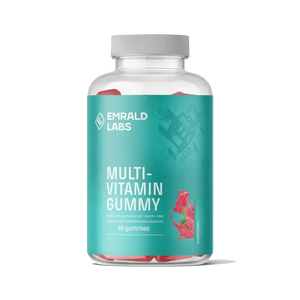
While no supplement can completely replace all the nutrients missing from your diet, multivitamins are one of the best if you’re on a restrictive diet and want a catch-all. Finding the best multivitamin for you will depend on your specific diet, age and any malabsorption issues, but generally, most will include fat-soluble vitamins such as Vitamin A, Vitamin D, B-Complex vitamins, Vitamin C, and other minerals like calcium and magnesium.
However, before committing to multivitamins, it’s important to know that they don’t correct any deficiencies and rather smooth over the chronic shortfalls in your diet that build up over months and years. Multivitamins are never going to out-nutrient real food but they can be used to supplement vitamins that are genuinely hard to get enough through food alone like Vitamin D (only through regular sunlight exposure), B12 (only found in meaningful amounts in animal products), and folate (hard to hit optimal levels when pregnant).
Where to buy the best multivitamins:
Vitamin D3 + K2
Vitamin D3 + K2 are often paired together due to the way they promote calcium intake in your body, with Vitamin D3 increasing calcium absorption and Vitamin K2 directing it to the bones and teeth, where it belongs. Taking D3 without K2 means you're increasing calcium absorption without necessarily controlling where it ends up, which is why some research has looked at whether high-dose D alone might contribute to arterial calcification over time. Pairing them addresses that gap.
It can be helpful to take Vitamin D3 + K2 if you’re not getting regular midday sun exposure and are likely running low on Vitamin D. Getting enough in your body Vitamin D3 is important as it plays a role in bone health, immune regulation, muscle function, and even mood. Vitamin K2 supports your Vitamin D3 supplementation by making sure the increased calcium you absorb ends up in the right place.
Where to buy the best Vitamin D3 + K2:
Omega-3 fish oil
Omega-3s are essential fatty acids that you can only get from food or supplements. Found primarily in fatty fish, Omega-3 is important for the body as it plays a role in anti-inflammatory signalling, brain structure, and cardiovascular function. Omega-3 Fish Oil is usually made up of EPA (eicosapentaenoic acid) and DHA (docosahexaenoic acid) and due to playing different roles in the body, a balance of both is preferred in Omega-3 supplementation.
Although often cited as ‘brain food’, Omega-3 is actually most recommended for people with elevated triglyceride levels (associated with cardiovascular risk), don’t eat enough fatty fish, or have inflammatory conditions such as rheumatoid arthritis. Research suggests it may support the brain and mood, but evidence is still not completely definitive and users are more likely to experience modest benefits rather than life-changing effects.
Where to buy the best Omega-3:
Goal-specific supplements
If you have specific health goals that you’d like to address with supplements, below are a few options that you can act as your daily health stack.
Magnesium glycinate
Magnesium is a common addition to many daily stacks due to its contributions to sleep quality, muscle recovery, and stress reduction. Magnesium plays a role in regulating neurotransmitters involved in calming the nervous system, which may in turn assist with sleep onset, relaxing muscles, and stress regulation. It’s often used as part of athletes’ supplement stacks. Magnesium glycinate in particular is a form of magnesium that is bound to glycine (an amino acid) and it’s recommended over other magnesium forms as it’s gentler on the gut and better absorbed into the body.
Probiotics
Probiotics are live bacterial strains that help support your gut microbiome, assisting with functions such as digestion and immune signalling. They can be helpful to add to your daily stack if you’re after digestive regularity and general gut comfort. Research on probiotics also suggests that it can support broader immune function and mood.
When looking for a probiotic to add to your daily stack, make sure to find specific named strains with CFU counts per strain, rather than a total blend number.
Adaptogens
Adaptogens are a category of plant-based supplements that have a variety of potential health effects. From ashwagandha to rhodiola to ginseng, adaptogens are theorised to help the body modulate the stress hormone system and thereby adapt to stress. Make sure to only take an adaptogen that has been researched around the specific benefits you’re after (e.g. stress resilience, energy, focus).
Iron
Iron deficiency is an extremely common condition in Australia and hence, many people add it to their daily stack. Iron is an essential mineral required to make hemoglobin, the protein in red blood cells that carries oxygen throughout your body. Supporting your body’s iron levels through iron supplements can help with energy levels and exercise performance/recovery (as low iron impairs oxygen delivery through the body).
B-Complex
B-Complex supplements refer to those that group all eight B vitamins (B1, B2, B3, B5, B6, B7, B9/folate, B12) to help support energy metabolism. B vitamins are cofactors in converting food into usable cellular energy and supporting normal metabolism (rather than stimulating energy), and B6, B9, and B12 in particular are involved in neurotransmitter synthesis (converting amino acids into chemical messengers in your brain).
A starter foundation pack (example)
Having covered all the common supplements in daily stacks, here’s an example of a starter foundation pack that you might want to consider taking, before building on with more goal-oriented supplements.
|
Supplement |
Typical Starting Dose |
Form to Look For |
When to Take |
Example |
|
Multivitamin |
1 serving/day (per label) |
Third-party tested (USP/NSF), methylated B's, no mega-doses |
With breakfast, with food |
|
|
Vitamin D3 + K2 |
1,000–2,000 IU D3 / 90–120 mcg K2 (MK-7) |
D3 (not D2), K2 as MK-7 |
With a meal containing fat |
|
|
Omega-3 Fish Oil |
1,000–2,000mg combined EPA+DHA |
Triglyceride form, IFOS-tested |
With a meal containing fat |
Please be aware that the supplements mentioned above are a reasonable default and not a personalised prescription. Always consult your doctor beforehand and adjust your dosage or supplements you take based on your individual lifestyle (e.g. sun exposure and diet).