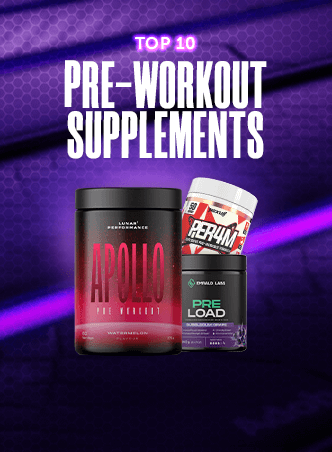















Take pre-workout about 20 to 30 minutes before training. That gives the caffeine and active ingredients time to be absorbed so they are working as you start your session. If you train later in the day, choose a caffeine-free pre-workout so it does not affect your sleep. Take it on a lighter stomach for a faster kick-in, or with a small snack if you train fasted and need something in the tank.
Key points
- Timing. Take pre-workout about 20 to 30 minutes before training.
- Why the wait. It gives caffeine and the active ingredients time to be absorbed.
- Morning vs evening. A standard caffeinated pre-workout suits early sessions; switch to caffeine-free at night so it does not affect your sleep.
- Stomach. A lighter stomach kicks in faster; a small snack is gentler if you train fasted.
- Daily caffeine. Keep your total daily caffeine within FSANZ guidance.
Quick facts
-
How long before training: about 20 to 30 minutes for most powders (up to 45 minutes is fine)
-
Why the wait: it gives caffeine and the active ingredients time to be absorbed
-
Morning training: a standard caffeinated pre-workout suits early sessions
-
Evening training: switch to a caffeine-free pre-workout so it does not affect your sleep
-
Empty stomach vs food: a lighter stomach kicks in faster; a small snack is gentler if you train fasted
-
Daily caffeine guide: keep total daily caffeine within FSANZ guidance and talk to your healthcare professional for personal advice
How long before a workout should you take pre-workout?
For most powdered pre-workouts, about 20 to 30 minutes before training is the sweet spot, and anywhere up to 45 minutes is fine. That window gives your body time to absorb the caffeine and the other active ingredients so they are working as you move into your first proper set rather than halfway through.
There is no single perfect number, because formulas differ and so do people. The practical approach: mix it, sip it on the way to the gym or during your warm-up, and by the time you are under the bar it is doing its job.
If you take it too early you may find the edge has come off by the back half of your session. Take it too late and you are chasing it.
Ready-to-drink pre-workouts and shots tend to hit a little sooner than powders because there is nothing to mix or break down, but the same rough window still applies.
Why timing matters: caffeine onset
The main reason timing matters is caffeine, which is the primary active in most pre-workouts. After you drink it, caffeine is absorbed and levels in the blood rise over roughly the next 30 to 60 minutes. Taking your pre-workout 20 to 30 minutes out lines that rise up with the start of your session, so caffeine supports energy and focus when you actually need it.
Other common pre-workout ingredients also benefit from a short head start. Citrulline is included to support blood flow to working muscles, which is the "pump" feeling many lifters chase, and beta-alanine is the ingredient behind the harmless tingling (paraesthesia) some people notice on the skin. None of these are instant, so the 20 to 30 minute buffer gives the whole formula time to be onboard.
Morning vs evening training
Morning sessions
A standard caffeinated pre-workout suits early training well. Taken 20 to 30 minutes before you start, it supports energy and focus for the session ahead, which is handy when you are not fully switched on yet. Just count it as part of your daily caffeine total, especially if you also drink coffee.
Evening and late sessions
This is where timing catches people out. Caffeine takes hours to clear your system, so a high-stim pre-workout taken at 7pm can still be working at bedtime and affect your sleep. If you train in the evening, the simple fix is to switch to a caffeine-free pre-workout. You still get the pump and focus ingredients like citrulline, without the caffeine hanging around when you are trying to wind down.
If you train twice a day, using a caffeine-free option for the second session is a common way to keep your total caffeine sensible.
Empty stomach vs with food
Both work. It comes down to how your stomach handles it and how fast you want it to kick in.
On a lighter or empty stomach
With less food to compete with, pre-workout tends to be felt a little sooner. Some people love training fasted first thing. The trade-off is that a strong stimulant hit on a completely empty stomach can feel harsh or cause a bit of jitteriness, so if you are sensitive, this may not be your best option.
With a small snack
A light snack 30 to 60 minutes before, something like a banana or a piece of toast, is gentler on the stomach and gives you a bit of fuel for the session. It may take marginally longer to feel the pre-workout, but many people find this the more comfortable route, especially for longer or heavier sessions.
There is no wrong answer. Try both across a couple of weeks and keep the one that leaves you feeling good and training well. Staying hydrated matters just as much as timing, so pair your session with water or an electrolyte drink if you sweat heavily.
Keep your daily caffeine sensible
Because most pre-workouts are caffeinated, timing goes hand in hand with dose. Check the caffeine content per serve on the label and count it towards your total for the day, alongside coffee, tea and energy drinks. Keep your total daily caffeine within FSANZ guidance.
Important: If you are sensitive to caffeine, take medication, or have a heart condition or other health concern, talk to your healthcare professional before using a pre-workout, and consider a caffeine-free option.
Pre-workout is not suitable for everyone. It is not recommended for anyone under 18, or for people who are pregnant or breastfeeding. If you are sensitive to caffeine, take medication, or have a heart condition or other health concern, talk to your healthcare professional before using a pre-workout, and consider a caffeine-free option.
This article is general information, not medical advice.
Frequently Asked Questions
How long before a workout should I take pre-workout?
About 20 to 30 minutes before training suits most powdered pre-workouts, and up to 45 minutes is fine. That window gives caffeine and the other active ingredients time to be absorbed so they are working as you start your session. Ready-to-drink versions can hit slightly sooner.
Should I take pre-workout on an empty stomach?
You can. On a lighter or empty stomach, pre-workout tends to be felt a little sooner because there is less food competing with it. The trade-off is that a strong stimulant hit with nothing in your stomach can feel harsh if you are sensitive. If that is you, a small snack like a banana or toast 30 to 60 minutes before is gentler and still gives you fuel for the session.
When should I take pre-workout for an evening workout?
Take it about 20 to 30 minutes before your evening session, but switch to a caffeine-free pre-workout. Caffeine takes hours to clear your system, so a high-stim pre-workout in the evening can still be working at bedtime and affect your sleep.
Can I take pre-workout every day?
Many people use pre-workout on training days as part of their routine. Count your pre-workout towards your daily caffeine total, and keep the total within FSANZ guidance. A caffeine-free option is a sensible way to keep your intake in check for daily or twice-daily training.
What happens if I take pre-workout too early?
If you take it too far ahead of training, the edge can come off before you finish, because caffeine levels rise and then gradually fall. It is not harmful, it just means the timing is not making the most of the formula.
Does pre-workout work straight away?
Not instantly. Caffeine is absorbed and levels in the blood rise over roughly the next 30 to 60 minutes, which is why the standard advice is to take pre-workout about 20 to 30 minutes before training.
Related products
-
Ghost Pump (Ghost) - caffeine-free
-
Pre Pump (Emrald Labs) - caffeine-free
New to the category? Start with what pre-workout is. For more on how it feels and how long it lasts, read how long pre-workout lasts and pre-workout side effects.