Key points
- Drink water before meals. It may help you avoid mistaking thirst for hunger and reduce calorie intake.
- Swap in good fats. Cooking with coconut oil brings medium-chain fatty acids linked to fullness.
- Track your food. Keeping a food diary is very successful in helping people lose weight.
- Use green tea and whey protein. Both are commonly studied in nutrition and may support your goals.
- Smaller plates. Switching to a smaller plate can trick your mind into eating less.

1. DRINK WATER BEFORE MEALS
It's actually extremely common for people to think that they're hungry when they're really thirsty, causing them to consume extra calories. So, it's always a good idea to drink water before a meal in case you're not actually hungry after all!
Not only that, but some research suggests drinking water before meals may be associated with reduced calorie intake as part of a balanced diet. One of the studies published on NBCI found that one study suggested that drinking water before meals may be associated with reduced food intake in some individuals.
 2. COOK WITH COCONUT OIL
Coconut oil can be used for countless things - as a hair conditioner, a moisturizer and a cellulite treatment to list a few - but did you know that it may help support your general health and wellbeing? To put it simply, coconut oil contains medium-chain fatty acids, which some research has explored in the context of balanced nutrition. One study showed that eating coconut oil helped burn an extra 120 calories per day.
Another study showed that some participants in studies reported a feeling of fullness when consuming foods containing medium-chain fatty acids. So, even though coconut oil does contain fats, it's a medium chain fatty acid fat (good fat) and research has shown that increasing the consumption of these fats leads to a feeling of fullness and an automatic reduction in calorie intake.
BUY YOURS
 3. KEEP A FOOD DIARY
When trying to lose weight, keeping track of what you're putting into your body each day makes sense. And science agrees - studies have found that keeping a food diary is very successful in helping participants lose weight.
The study, which was published in the American Journal of preventative medicine, surveyed 1685 adults who were over 25 - meeting each week to share food diaries. After six months, those who kept food records six days a week lost about twice as much weight as those who kept their records one day a week or less.

4. DRINK GREEN TEA
It's no secret that green tea is great for your health, but it can also be great for your weight loss too. The power packed drink contains an antioxidant called green tea contains catechins and caffeine, which are commonly studied ingredients in nutrition research.

5. SUPPLEMENT WITH WHEY PROTEIN
If you feel like losing weight is an uphill battle - and you're struggling to shift the kilos even though you're eating healthily and exercising, then maybe you should try taking a whey protein supplement. To put it in layman's terms, protein is made up of 20 different amino acids. Whey protein contains the amino acids that researchers believe are most important for building muscle - as well as being fast to digest. A study found that whey protein is a source of amino acids and may support muscle maintenance as part of a balanced diet and exercise programme.
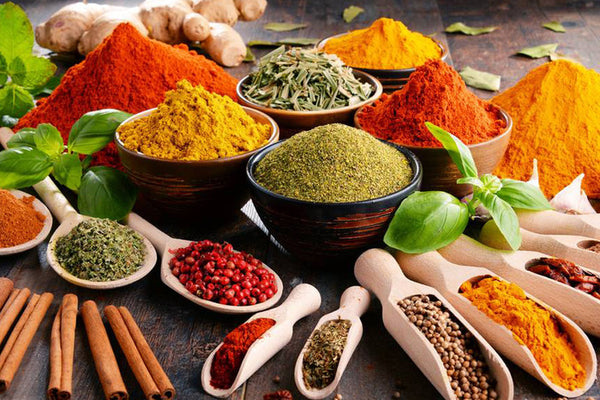
6. SPICE UP YOUR LIFE
Who said healthy had to be bland? adding chilli to meals is a popular way to add flavour to healthy cooking. Consuming chilli gives your metabolism a kick start because chilli is a flavourful addition to meals and is commonly explored in nutrition research. There's an array of different studies but most suggest that chilli is a popular ingredient in many healthy eating plans!
If you're looking to kill your cravings for sweet food, try eating cayenne. According to a study published in Chemical Senses, the subjects reported that cayenne is a spice used in a variety of cuisines and is sometimes included in healthy eating plans.

7. USE SMALLER PLATES
While using smaller plates in the hope to consume less food may seem a little gimmicky - it's actually been proven to work. A study published in the Journal of Consumer Research discovered that using a smaller plate actually tricks your mind into eating less, without realising it. It found that switching from a 30cm plate to a 25cm plate resulted in the subjects consuming 22% less calories. Considering the average dinner is around 700 calories, that knocks off over 150 calories in a single meal!
We are hoping that you can use these 7 easy ways to lose weight to get yourself started on your fitness journey. If you are ready to get started, join the Elite Supps fam for support and motivation, or follow us on Instagram and TikTok for the best fitspiration.
A note on a couple of these
Two items above deserve qualifying, because the evidence has moved.
Coconut oil. The claim rests on medium-chain triglycerides being metabolised differently. The catch is that coconut oil is only partly MCT, and the research showing metabolic effects generally uses concentrated MCT oil rather than coconut oil. It is also high in saturated fat, and heart health bodies do not recommend it as a preferred cooking fat. Cooking with it is unlikely to help you lose weight, and swapping olive oil for it is probably a step backwards.
Green tea. The effect on metabolic rate is real and very small. Most of it comes from the caffeine. Green tea is a good drink; it is not a fat loss intervention, and the extract is not meaningfully different in that respect.
The other five items on this list, water before meals, a food diary, protein, sleep and fibre, are considerably better supported. It is worth knowing which is which.
What is actually the most proven way to lose weight?
A sustained calorie deficit, achieved in whatever way you can maintain. Everything that works is a route to that.
Ranked by strength of evidence:
- A calorie deficit you can hold for months.
- Higher protein intake. Satiety and muscle retention.
- Self-monitoring. Food diaries and regular weighing are among the best-supported behavioural tools, which is why number three on this list earns its place.
- Resistance training. Determines how much of the loss is fat.
- Sleep. Affects appetite regulation directly.
- Daily movement. Steps outside formal training.
None of it is surprising, and that is rather the point. The genuinely proven methods are the ones that have been in every sensible article for twenty years.
Can I mimic prescription weight-loss medication naturally?
No, and the question deserves a direct answer.
The current generation of prescription weight-loss medications are GLP-1 receptor agonists: pharmaceutical compounds acting on specific receptors at doses no food or supplement replicates. Anything sold as a natural equivalent is overstating what it does.
Protein, fibre and food volume do influence satiety through the body's own signalling. That is genuinely useful and not the same thing. If you are considering medication for weight management, that is a GP conversation.





















 2. COOK WITH COCONUT OIL
 3. KEEP A FOOD DIARY