
















Sore joints, fine lines and muscle that feels harder to hold onto tend to arrive together, usually from your thirties onwards. They share a common thread, and it is worth understanding what that thread is and what it is not.
The short version: they are connected, collagen is part of the story, and no supplement is the fix the title of this article implies.
Key points
- Collagen is about 30% of the protein in your body.
- Production declines from your mid-20s. Normal ageing.
- Skin has the best supplement evidence. Joints are less settled.
- Collagen is not a complete protein. It will not hold muscle.
- Resistance training does more than anything you can buy.
What connects them
Collagen is the most abundant protein in the body, making up roughly 30% of total protein. It is the structural material in skin, tendons, ligaments, cartilage and bone, which is why its decline shows up in several places at once.
Production begins decreasing from the mid-twenties and continues gradually. That is normal ageing rather than a deficiency, and it is worth being suspicious of anything that frames it as a correctable shortfall.
Muscle is a partial exception. Muscle loss with age is real, but it is driven by disuse and inadequate protein far more than by anything to do with collagen. It is also the most reversible of the three.
What actually helps each one
Sore joints
Collagen supplementation has some supporting evidence for joint comfort, from small trials in athletes and in people with osteoarthritis. Results are inconsistent across studies and it is an active research area rather than a settled one. Reasonable to trial for twelve weeks.
What has better evidence: appropriate loading. Strength training improves joint health, which is counterintuitive to a lot of people with sore knees, and it outperforms any supplement here. Managing body weight also reduces load on weight-bearing joints.
Persistent joint pain that limits you is a GP conversation, not a supplement decision.
Fine lines
This is where collagen supplementation has its strongest evidence, and it is still modest. Several randomised trials and reviews report improvements in skin hydration and elasticity over eight to twelve weeks. The trials are small and mostly industry funded.
What has better evidence: daily sunscreen. UV exposure is the largest single driver of collagen breakdown in skin, and nothing you swallow offsets it. Topical retinoids also have better evidence for skin appearance than any oral supplement.
Weakening muscle
Collagen is the wrong tool, and this is the part worth being blunt about because the article originally implied otherwise.
Collagen is not a complete protein. It is very low in tryptophan and short on leucine, the amino acid most associated with triggering muscle protein synthesis. Gram for gram it does considerably less for muscle than whey, dairy, eggs or a good plant protein.
What works: resistance training and adequate protein. Those two, done consistently, do more for age-related muscle loss than everything else combined. For most people over forty, starting to lift is the single highest-value change available.
What deficiency causes sore joints and aching muscles?
Several can, which is exactly why guessing is a poor approach.
- Vitamin D. Deficiency is common in Australia despite the climate, and can cause muscle aches and bone pain.
- Iron. Deficiency causes fatigue and can contribute to muscle aching.
- Magnesium. Involved in muscle function.
- Vitamin B12. Deficiency can cause aches and neurological symptoms.
All four are identifiable with a blood test, which is cheaper and considerably more useful than working through supplements one at a time.
Widespread joint pain and muscle aching also have causes that are not nutritional at all, including inflammatory conditions and thyroid problems. If it is persistent, get it looked at rather than supplemented.
An honest order of operations
- Resistance training. Helps all three. Nothing else on this list comes close.
- Enough protein, from food or a complete protein powder.
- Daily sunscreen, for the skin part.
- A blood test if symptoms are persistent, rather than guessing at deficiencies.
- Sleep. Recovery happens there.
- Then, if you want, a collagen supplement for skin, with realistic expectations and a twelve-week trial.
We sell the thing at number six. Putting it anywhere higher would not be honest.
If you want to try collagen
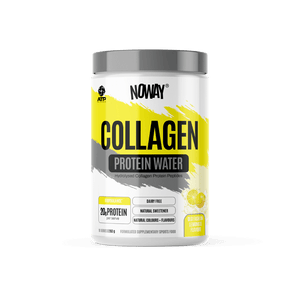
Look for hydrolysed collagen at around 10 g per serve. Collagen+ is our house-brand option, and the full collagen range is worth comparing on grams per serve rather than price per tub.
If muscle is your actual concern, a whey protein is the better purchase, because collagen is not a complete protein.
Where to go next
- How strong the evidence is for each collagen claim.
- How skin works, and what degrades collagen.
- Why resistance training is worth starting.