
















Collagen is one of the most heavily marketed supplements on the shelf, and the evidence behind its various claims is not equally strong. Some of it is reasonable. Some of it is thin.
This is what the research actually supports, ranked by how well established it is. We sell collagen, and we would still rather you bought it for the right reasons.
Key points
- Skin has the best evidence. Hydration and elasticity.
- Joints are second. Promising, less settled.
- Bone and muscle are weakest. Very limited.
- Most trials are industry funded. Worth knowing.
- 8 to 12 weeks before judging anything.
What Does Collagen Do?
Collagen protein has a vital role in the body and plays a massive role in keeping your body healthy, which is why it's surprising that so few people know what exactly collagen protein is and why it's so important.
Collagen is so important because proteins are the building blocks of your body. Collagen helps build connection tissue in your body.
Everything from your skin and other organs to your muscles, tendons, and bones needs collagen to build. As your body naturally heals and grows,.
This doesn't mean you have to be injured to need collagen proteins. Your body is continually breaking down and rebuilding, which is why collagen is so important. Collagen can help with the following:
- Skin elasticity and wrinkles
- Muscles stretching
- Limb movement
- Bone density
- Healthy joints
- Cartilage and soft tissue
- Organ health
- Eye Health
- And much more!
Different Types of Collagens
When we talk about collagen, there are actually at least 28 different types of collagen proteins. The slight variations in how the molecules and amino acids are arranged, and each type of collagen has its own uses and benefits.
However, there are five main types of collagen proteins that are the most commonly used in the human body, and different supplements can support each type.
These are the five main types of collagen proteins:
Type 1: This is the most common type of collagen in your body. When people think about what is collagen proteins, this is what people think of. It makes up around 90% of your collagen proteins and is found packed underneath your skin. This collagen can be replaced by standard supplements as well as injections and is used to support healthy skin, hair, and nails. It also helps support your bones, ligaments, and tendons.
Type 2: There has been less research into what type 2 collagen proteins do. We know they can help support your joints and that adequate type 2 collagen is associated with supporting joint comfort and cartilage flexibility. Type 2 collagen may help support joint flexibility and ease of movement. and helps keep your cartilage elastic and flexible.
Type 3: After type 1, type 3 is the most common type of collagen protein. The type of collagen helps support your organs, blood vessels, muscles, and more. and is usually injected to target specific areas.
Type 4: Type 4 collagen proteins are similar to type 5 and are not as common as the other types. Type 4 can help form the placenta and is found in the eye. It can also help with bones, muscles, liver, lungs, and other organs.
Type 5: Similar to type 4, type 5 collagen proteins help with bone formation and joint cartilage, but this is still in the early stages of testing.
What Happens When You Don't Have Enough Collagen?
Your body naturally produces collagen. However, around the age of 30, your body starts to produce less collagen. Some research suggests that from the age of 30, collagen protein production decreases by around 1% every year.
And it's not just age that can cause collagen protein levels to decrease. Smoking, stress, autoimmune diseases, an unhealthy lifestyle, and diet, as well as excess sun exposure, can also cause your collagen production to drop.
This means that as we age, joints get stiff and harder to move. You may experience joint pain as the connective tissue is less effective. Your skin will start to wrinkle as it becomes less elastic, and your eyesight will slowly get worse.
You may also experience problems with your intestines and digestion, as well as blood and artery problems.
What is Collagen Protein Powder?
But there's no need to panic. If your collagen levels are decreasing, you can increase your collagen protein levels by taking supplements.
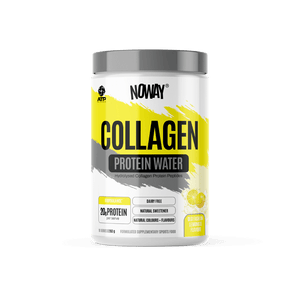
Collagen protein powder can be taken daily to help support your body's collagen intake as part of a balanced diet.
Usually, collagen protein powder and other collagen protein supplements contain broken-down forms of collagen called peptides. These can be safely ingested and broken down by the body to form collagen proteins.
Taking collagen protein supplements is safe, quick, and easy and is an affordable way to help give our body the nutrients it needs.
Many collagen powders contain all five main types of collagen to give your body an overall boost. This means you can take one supplement to benefit your skin, hair, eyes, nail, bones, organs, and more. These collagen powders can help keep you healthy as you age.
In fact, collagen protein powder may help support your skin's appearance and general wellbeing as you age, keeping you looking and feeling your best.
Why Take Collagen Proteins
Collagen proteins are an excellent way to increase your collagen level as your natural production slows down. As a protein, collagen can help with:
- Making your skin glow
- Fewer wrinkles
- Supporting muscle recovery
- Joint flexibility
- Organ Health
Many people choose a collagen supplement to support skin appearance, general muscle recovery after exercise, and overall joint comfort.
Almost everyone can benefit from collagen supplements. However, since many collagen supplements contain animal by-products, collagen isn't always suitable for vegetarians and vegans. If you want to maintain your health and look your best and keep your skin, hair, and nails healthy, collagen could be an excellent supplement for you.
How good is the evidence, honestly?
Mixed, and it is worth understanding the shape of it before the specifics.
Most collagen research shares the same limitations: small participant numbers, short durations, and funding from collagen manufacturers. That does not make the findings wrong, but it does mean effect sizes tend to look better in the published literature than they would in a fully independent one. Independent replication is thinner than the marketing implies.
What follows is ordered by how confident you can reasonably be.
Skin: the strongest case
This is where the evidence is best, and it is still modest.
Multiple randomised controlled trials and several reviews have reported improvements in skin hydration and elasticity with collagen peptide supplementation, typically over 8 to 12 weeks. The findings are reasonably consistent across studies, which is more than can be said for the other claims.
The honest framing: a measurable improvement in skin hydration and elasticity, not a visible transformation. Anyone promising the second is selling past the evidence.
More detail in our guide to whether collagen is good for skin.
Joints: promising, unsettled
Some trials have reported reduced joint discomfort in athletes and in people with osteoarthritis, particularly using specific collagen peptide formulations.
The studies are small, the formulations differ, and results are not consistent across all of them. It is an active research area rather than a settled one. If joint comfort is your goal, it is a reasonable thing to try for three months and then assess honestly.
It is not a treatment for arthritis. If you have joint pain that limits you, that is a GP conversation.
Bone density: limited
A small number of trials, mostly in postmenopausal women, have reported effects on bone mineral density markers over 12 months.
This is early-stage evidence from few studies. It is not established, and collagen is not a treatment for osteoporosis. The interventions with genuine evidence for bone density are resistance training, adequate calcium and vitamin D, and where indicated, prescribed medication.
Muscle: the weakest claim
This one is worth being blunt about, because it is the claim most often made on packaging.
Collagen is not a complete protein. It is very low in tryptophan and short on several essential amino acids, including leucine, which is the amino acid most associated with triggering muscle protein synthesis. Gram for gram it is substantially less useful for muscle than whey, dairy, egg or a good plant blend.
A couple of small studies have looked at collagen alongside resistance training with some positive findings, but the mechanism argues against it being a good muscle protein, and the weight of evidence supports using something else for that job.
If you want protein for muscle, buy whey or a plant protein. Take collagen for skin if you want it, as a separate thing.
Is it really worth taking?
Depends entirely on what you want from it.
- Worth trying if skin hydration and elasticity are your goal and you will give it three months.
- Reasonable to try for joint comfort, with realistic expectations.
- Not worth it as a muscle protein. Buy whey.
- Not worth it if you are expecting a visible transformation, or a treatment for a diagnosed condition.
The other honest point: it is an ongoing cost for a modest effect. That is a fair trade for some people and not for others.
What is the downside of taking collagen?
- It is not a complete protein, so it should not replace your main protein source.
- Cost. The most common real downside. It is a recurring purchase.
- Allergens. Marine collagen comes from fish. Bovine from cattle.
- Mild digestive upset in some people, usually settling.
- Not in pregnancy without advice. Check with your GP.
There is no established serious risk at normal doses in healthy adults. The downsides are practical rather than medical.
What are the signs collagen is working?
There is no reliable list, and the "5 signs" framing you will see everywhere is marketing rather than science.
What people most commonly report first is skin feeling less dry or tight. That is subjective, it overlaps with a dozen other variables including weather and hydration, and it is not measurable at home.
If you genuinely want to know whether it is doing anything for you, take a photograph in consistent lighting at the start and compare at twelve weeks. Gradual change is very difficult to perceive day to day, which is exactly what makes this category so easy to market.
Where to go next
- What collagen protein is, and the different types.
- Which benefits apply to you, by goal.
- How to actually take it: dose, timing and mixing.
- Which one to buy.
The full collagen range is worth comparing on grams per serve rather than price per tub.
If you are ready to choose one, our full range of collagen supplements covers marine, bovine and grass-fed sources, and our team's top ten collagen picks is the short version if you would rather not compare the whole range yourself.