



















Collagen has been a buzzword in the beauty, medical, and fitness industries for several years now. Making sure you support your collagen intake may contribute to your general health and wellbeing, yet so many of us don't know what collagen protein is or think it isn't just used in skin care for wrinkles.
But collagen is much more than just helping with wrinkles. Collagen protein is a type of protein in your body that affects everything from your skin, cartilage, and hair to your bones, tendons, and organs. Collagen levels naturally decrease as you age, so supplements, creams, and medical injections can be used to help supplement your collagen levels.
Keep reading to learn more about collagen protein's role in the body, what it's made of, and why you should take your collagen levels seriously.
Key points
- A key protein. collagen is a protein in your body made up of amino acids.
- Builds the body. it affects skin, cartilage, hair, bones, tendons, and organs.
- Five main types. there are five main types, with type 1 the most common.
- Slows from 30. collagen production decreases from around the age of 30.
- Top it up. collagen protein powder can help support your collagen levels.
Collagen protein, or collagen, is a type of protein found in everyone's body. Like all proteins, collagen is made up of amino acids.
Specifically, collagen protein is mainly made up of proline, glycine, and hydroxyproline. For your body to make Collagen Protein, you also need the right amount of vitamin C, zinc, copper, and manganese.
Collagen protein can only exist in the human body because it's made by the human body. Collagen supplements usually contain the building blocks to help your body create collagen protein. So, when you use a collagen cream, get medical collagen injections, or take a capsule, you aren't ingesting collagen protein.
Collagen protein makes up 30% of your total protein and around 60% of all your cartilage.
What Does Collagen Do?
Collagen protein has a vital role in the body and plays a massive role in keeping your body healthy, which is why it's surprising that so few people know what exactly collagen protein is and why it's so important.
Collagen is so important because proteins are the building blocks of your body. Collagen helps build connection tissue in your body.
Everything from your skin and other organs to your muscles, tendons, and bones needs collagen to build. As your body naturally heals and grows,.
This doesn't mean you have to be injured to need collagen proteins. Your body is continually breaking down and rebuilding, which is why collagen is so important. Collagen can help with the following:
- Skin elasticity and wrinkles
- Muscles stretching
- Limb movement
- Bone density
- Healthy joints
- Cartilage and soft tissue
- Organ health
- Eye Health
- And much more!
Different Types of Collagens
When we talk about collagen, there are actually at least 28 different types of collagen proteins. The slight variations in how the molecules and amino acids are arranged, and each type of collagen has its own uses and benefits.
However, there are five main types of collagen proteins that are the most commonly used in the human body, and different supplements can support each type.
These are the five main types of collagen proteins:
Type 1: This is the most common type of collagen in your body. When people think about what is collagen proteins, this is what people think of. It makes up around 90% of your collagen proteins and is found packed underneath your skin. This collagen can be replaced by standard supplements as well as injections and is used to support healthy skin, hair, and nails. It also helps support your bones, ligaments, and tendons.
Type 2: There has been less research into what type 2 collagen proteins do. We know they can help support your joints and that adequate type 2 collagen is associated with supporting joint comfort and cartilage flexibility. Type 2 collagen may help support joint flexibility and ease of movement. and helps keep your cartilage elastic and flexible.
Type 3: After type 1, type 3 is the most common type of collagen protein. The type of collagen helps support your organs, blood vessels, muscles, and more. and is usually injected to target specific areas.
Type 4: Type 4 collagen proteins are similar to type 5 and are not as common as the other types. Type 4 can help form the placenta and is found in the eye. It can also help with bones, muscles, liver, lungs, and other organs.
Type 5: Similar to type 4, type 5 collagen proteins help with bone formation and joint cartilage, but this is still in the early stages of testing.
What Happens When You Don't Have Enough Collagen?
Your body naturally produces collagen. However, around the age of 30, your body starts to produce less collagen. Some research suggests that from the age of 30, collagen protein production decreases by around 1% every year.
And it's not just age that can cause collagen protein levels to decrease. Smoking, stress, autoimmune diseases, an unhealthy lifestyle, and diet, as well as excess sun exposure, can also cause your collagen production to drop.
This means that as we age, joints get stiff and harder to move. You may experience joint pain as the connective tissue is less effective. Your skin will start to wrinkle as it becomes less elastic, and your eyesight will slowly get worse.
You may also experience problems with your intestines and digestion, as well as blood and artery problems.
What is Collagen Protein Powder?
But there's no need to panic. If your collagen levels are decreasing, you can increase your collagen protein levels by taking supplements.
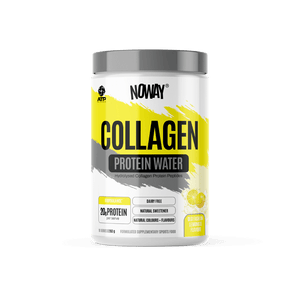
Collagen protein powder can be taken daily to help support your body's collagen intake as part of a balanced diet.
Usually, collagen protein powder and other collagen protein supplements contain broken-down forms of collagen called peptides. These can be safely ingested and broken down by the body to form collagen proteins.
Taking collagen protein supplements is safe, quick, and easy and is an affordable way to help give our body the nutrients it needs.
Many collagen powders contain all five main types of collagen to give your body an overall boost. This means you can take one supplement to benefit your skin, hair, eyes, nail, bones, organs, and more. These collagen powders can help keep you healthy as you age.
In fact, collagen protein powder may help support your skin's appearance and general wellbeing as you age, keeping you looking and feeling your best.
Why Take Collagen Proteins
Collagen proteins are an excellent way to increase your collagen level as your natural production slows down. As a protein, collagen can help with:
- Making your skin glow
- Fewer wrinkles
- Supporting muscle recovery
- Joint flexibility
- Organ Health
Many people choose a collagen supplement to support skin appearance, general muscle recovery after exercise, and overall joint comfort.
Almost everyone can benefit from collagen supplements. However, since many collagen supplements contain animal by-products, collagen isn't always suitable for vegetarians and vegans. If you want to maintain your health and look your best and keep your skin, hair, and nails healthy, collagen could be an excellent supplement for you.
Important: However, since many collagen supplements contain animal by-products, collagen isn't always suitable for vegetarians and vegans.
Final Thoughts
With so many people still wondering, "what is collagen protein" it's not a surprise that the collagen powder market is growing. Now, more than ever, you can find collagen supplements, collagen powder, and even collagen drinks, creams, and pills. Collagen injections are also used in the beauty industry by professionals.
As a building block for your body to heal and grow, ensuring you have enough collagen can help with everything from your skin and hair to your eyes and bones.
If you are approaching the age of 30 or are already over 30, you could benefit from adding a collagen protein powder to your life. With so many benefits, collagen is taking the world by storm, and there are plenty of products to choose from.
How is collagen protein different from regular protein powder?
The difference is the amino acid profile, and it decides what each is good for.
- Whey, casein, egg and good plant blends are complete proteins. They contain all nine essential amino acids in useful amounts, including leucine, the one most associated with triggering muscle protein synthesis.
- Collagen is not. It is very low in tryptophan and short on leucine. It is roughly a third glycine, which is unusual and is part of why it is studied for connective tissue rather than muscle.
Practically: buy whey or a plant protein for muscle and for hitting protein targets. Buy collagen for skin, if that is your goal. They are different products and plenty of people take both.
Which foods are highest in collagen?
Collagen sits in animal connective tissue, so the richest sources are the parts most modern cooking avoids:
- Gelatine. Cooked collagen, and by far the cheapest source available.
- Bone broth. The most cited, though the amount varies enormously with how it was made.
- Slow-cooked cuts heavy in connective tissue: osso buco, oxtail, chuck, lamb shank.
- Skin-on chicken, pork crackling, fish skin.
No plant food contains collagen. What plants provide is the raw material your body uses to make its own: vitamin C, zinc, and amino acids. Products marketed as "vegan collagen" are collagen builders, not collagen.
Whether eating collagen beats simply eating enough protein and vitamin C is genuinely unsettled.
What is the downside of taking collagen?
- It is not a complete protein, so it should not replace your main protein source.
- Cost. An ongoing purchase for a modest effect.
- Allergens. Marine from fish, bovine from cattle. No vegan option exists.
- Mild digestive upset in some people, usually settling.
- Not in pregnancy without medical advice.
No established serious risk at normal doses in healthy adults. The downsides are practical rather than medical.
What are the signs collagen is working?
There is no reliable list, and the "5 signs" articles are marketing.
Skin feeling less dry is what people most often report first, and it is subjective. If you want to judge it properly, photograph yourself in consistent lighting at the start and compare at twelve weeks. Nothing meaningful happens in a fortnight.
Read more
This article covers what collagen is. The rest of the picture:
- How strong the evidence is, claim by claim.
- Which benefits apply to you, by goal.
- The skin evidence in depth.
- How skin works, and what degrades collagen.
- How to take it.
- Which one to buy.