


















Creatine is the most studied supplement in sports nutrition, and also the most misunderstood.
This guide answers the questions Australians actually ask about creatine benefits: what it does, what it is good for, whether it makes you gain weight, how long it takes to work, and whether it is good for you. If you want the basics of what creatine is first, start with our guide on what creatine is.
Key points
- Creatine helps your muscles produce energy for short, intense effort like heavy lifts and sprints.
- It is best for strength, power and high-intensity performance, not fat loss.
- Any quick early weight gain is water drawn into muscle, not body fat.
- Results build over weeks of consistent training, not overnight.
- It is widely regarded as safe for healthy adults; check with your GP first if you have a kidney concern, or are pregnant or breastfeeding.
What does creatine do?
Creatine helps your muscles produce energy during short, intense effort. It is a compound your body makes naturally and stores mostly in muscle as phosphocreatine, which rapidly regenerates ATP, the immediate fuel for fast, explosive movement. Supplementing raises those stores, so you can push out a few more reps or a faster sprint before fatigue sets in.
Your muscles only hold a small amount of ATP at any moment, so creatine acts less like a stimulant and more like topping up a fuel tank your body already uses. It is most useful for training that involves repeated short, hard efforts: heavy lifts, sprints and interval work.
It does not add energy on its own, and it is not a pre-workout. For dosing detail, see how much creatine to take per day.
What is creatine good for?
Creatine is best known for supporting strength, power and high-intensity performance, which is why it is popular with lifters, sprinters and team-sport athletes. It is not a fat burner, and it does not build muscle on its own without consistent training.
Creatine is also one of the few supplements researched specifically in women; see creatine for women for that detail.
Does creatine make you gain weight?
Creatine can cause a small, quick weight gain in the first week or two, but this is water drawn into your muscle cells, not fat (Antonio et al., 2021). Creatine has no kilojoules and does not add body fat. Any lasting increase after that comes from lean muscle you build through consistent training, not from the creatine itself.
That early water weight is why some people notice slightly fuller-looking muscles within the first few weeks. It is temporary and normal, and it is not a sign the creatine is causing you to store fat.
If you would rather ease in and blunt that initial shift, skipping the loading phase and taking a steady daily dose reaches the same end point more gradually. We cover the full timeline in when to take creatine.
How long does creatine take to work?
Creatine works once your muscle stores are fully saturated, which takes about three to four weeks at a steady 3 to 5 grams a day (Kreider et al., 2017). A loading phase of around 20 grams a day, split into four doses for about a week, reaches saturation faster (Kreider et al., 2017).
You will not feel an instant hit. The benefit shows up as more reps, better recovery and slowly building strength over the following weeks of consistent training.
The key point: creatine only does its job if you keep training and eating enough to support muscle growth. Once your muscles are saturated, it becomes a maintenance game rather than a source of endless new gains.
Is creatine good for you?
For healthy adults, creatine is widely regarded as safe and effective when taken as directed, and it is one of the most studied supplements in sports nutrition. A daily dose of 3 to 5 grams is commonly used (Kreider et al., 2017).
No serious adverse effects have been shown in healthy people without underlying conditions. Creatine may raise creatinine readings without harming the kidneys. If you are pregnant, breastfeeding, under 18, or have a kidney concern, speak to your GP first.
Common safety worries in context
To put the common worries in context:
- Kidneys: creatine is not shown to damage the kidneys in healthy people. It can raise creatinine, a lab marker, without that meaning kidney harm (Antonio et al., 2021).
- Hydration: creatine does not cause dehydration; it draws water into muscle cells (Antonio et al., 2021).
- Weight: any early gain is water, not fat.
Important. Speak to a health professional before starting if you have pre-existing kidney disease, take medication affecting the kidneys, or are pregnant or breastfeeding.
For a fuller rundown, read creatine side effects.
Which form of creatine is best for muscle growth?
Creatine monohydrate is the best-supported form for building muscle and strength, and it is the most affordable, so it is the sensible default for most people. Other forms exist mainly for taste, convenience or mixability rather than better results. What matters most is taking a proper daily dose consistently, whichever format you choose.
| Form | Key features | Consider it if |
|---|---|---|
| Creatine monohydrate | Most researched and most affordable | You want the proven default |
| Creatine HCL | Bound to hydrochloric acid, more water-soluble | You find monohydrate causes bloating |
| Creapure | A high-purity monohydrate made in Germany (AlzChem, Creapure manufacturer) | You want a named, third-party-tested source |
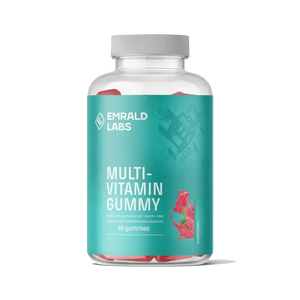
| Creatine gummies or capsules | Convenient, no mixing | Convenience and consistency matter most to you |
Elite's creatine picks
At Elite Supps, the house-brand pick is Emrald Labs Creatine Monohydrate, with Emrald Purest Creatine Pro and Emrald Creatine HCL 2.0 for premium and low-bloat options, plus Emrald Creatine Monohydrate Capsules if you prefer no mixing. Browse the full creatine range, and if you are stacking for muscle growth, pair it with a quality option from our protein range.
The bottom line on creatine benefits
Creatine gives a reliable, compounding edge rather than an instant transformation. It is shown to support strength, power and lean muscle when you train consistently, the early scale change is water rather than fat, and it is well tolerated by healthy adults at a steady daily dose. Set your expectations for weeks, not days, keep training and eating to support your goals, and let the results build.
References
- Kreider RB, et al. International Society of Sports Nutrition position stand on creatine supplementation. J Int Soc Sports Nutr. 2017;14:18. PMC5469049
- Antonio J, et al. Common questions and misconceptions about creatine supplementation. J Int Soc Sports Nutr. 2021;18:13. PMC7871530
- AlzChem Group AG. What is Creapure. Manufacturer documentation. creapure.com
This article is general information only and is not medical advice. Individual results vary. Creatine is a dietary supplement and not a substitute for a balanced diet or training. If you are pregnant, breastfeeding, under 18, take medication or have a medical condition, including any kidney concern, speak to your GP or a qualified health professional before starting creatine. Always follow the directions on the label.